
Introduction
Most SaaS demos fail in the first five minutes not because the product is weak, but because the value isn’t obvious. VCs aren’t evaluating your feature list. They’re looking for signals: clarity, differentiation, scalability, and whether your product can win in a crowded market.
UI design plays a bigger role here than most founders admit. It’s not just aesthetics it’s how your product communicates intelligence.
This is where ADLC the AI-driven software development lifecycle reshapes UI design itself. Instead of static interfaces, the AI software development lifecycle enables adaptive, data-driven UI experiences that demonstrate real product intelligence during demos.
If you’re building a SaaS product and preparing for investor conversations, here’s what actually matters and how AI UI design influences funding decisions.
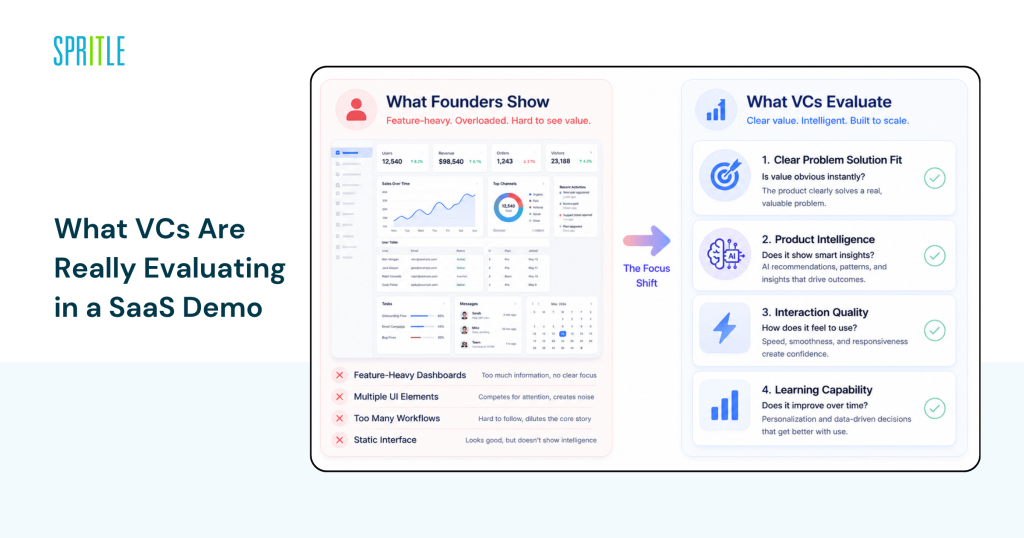
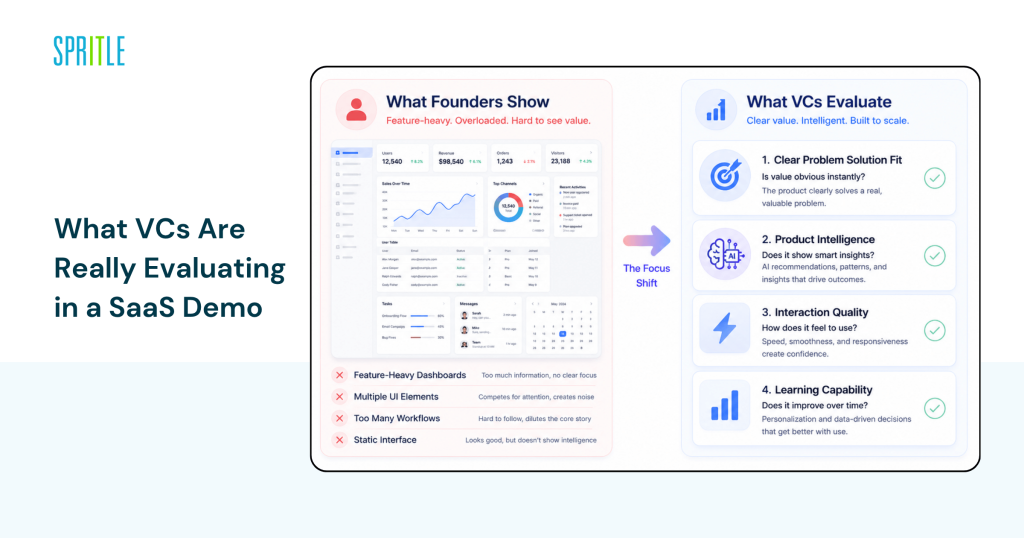
What VCs Are Really Evaluating in a SaaS Demo
Here’s the problem: most teams design demos for users, not investors.
VCs are asking different questions:
- Can this scale?
- Is there defensibility?
- Does the product learn and improve over time?
Signal Over Features
According to First Round Capital (2023), VCs form strong opinions within the first 3–7 minutes of a demo.
They’re not watching every click. They’re looking for:
- Clear problem-solution alignment
- Evidence of product intelligence
- Speed and smoothness of interaction
The “Intelligence Layer” Test
This is where it gets interesting.
Modern VCs expect:
- AI-powered recommendations
- Personalized user experiences
- Data-driven decision-making within the product
If your UI looks static, your product feels outdated—regardless of backend complexity.
Why Traditional UI Design Falls Flat in Investor Demos
Traditional UI design focuses on usability and aesthetics. That’s necessary but not sufficient.
Static Interfaces Don’t Show Learning
Most SaaS UIs:
- Display data
- Enable actions
- Follow fixed workflows
They don’t:
- Adapt dynamically
- Show intelligence in real time
To a VC, that signals limited differentiation.
Overloaded Dashboards
Founders often:
- Try to showcase every feature
- Build complex dashboards
Result:
- Cognitive overload
- Diluted messaging
NNGroup (2022) research shows that users and investors retain less than 30% of information from overloaded interfaces.
Lack of Narrative Flow
A good demo is a story. Traditional UI design rarely supports:
- Guided user journeys
- Context-aware transitions
This is where most demos lose attention.
How AI UI Design in ADLC Changes the Game
AI UI design isn’t just about personalization it’s about demonstrating intelligence as a core product capability.
Adaptive Interfaces That Respond in Real Time
In the AI-driven software development lifecycle, UI components:
- Adjust based on user behavior
- Surface relevant insights dynamically
- Prioritize actions intelligently
This creates a sense of:
- Speed
- Relevance
- Product maturity
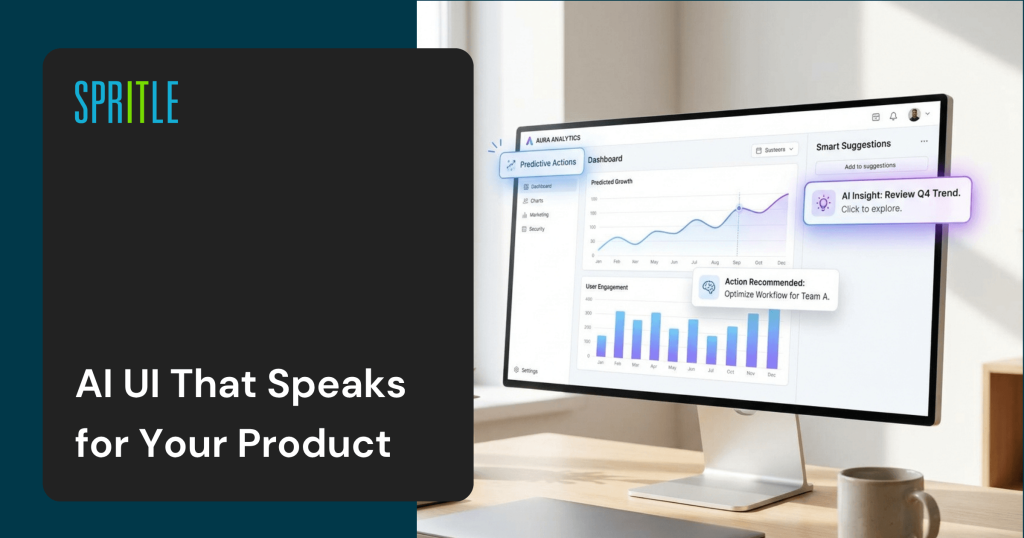
AI-Powered Recommendations in the UI
VCs want to see:
- Decision support
- Predictive insights
- Automation
Examples include:
- Suggested actions in dashboards
- Forecasting visuals
- Smart alerts
This is where AI lifecycle management tools directly influence UI design.
Data Storytelling Instead of Data Display
Instead of raw data, AI UI design focuses on:
- Highlighting key insights
- Explaining “why it matters”
- Guiding user decisions
This aligns with how investors think outcomes over inputs.
Continuous UI Optimization Through ADLC
In ADLC, UI design evolves based on:
- User interaction data
- A/B testing results
- AI-driven insights
This ensures:
- Better engagement
- Stronger demo performance over time
Gartner (2024) predicts that AI-driven UX optimization can improve engagement metrics by up to 35%.
Real-World Examples of AI UI That Impress Investors
1. Notion AI: Context-Aware UI Enhancements
Notion integrates AI directly into its interface:
- Suggests content
- Automates workflows
- Enhances productivity
Why it works for VCs:
- AI is visible and intuitive
- Value is immediate
2. HubSpot’s Predictive Dashboards
HubSpot uses AI to:
- Predict customer behavior
- Recommend actions
Why it works:
- Demonstrates business impact
- Connects UI directly to revenue outcomes
3. Figma’s AI-Assisted Design Features
Figma is introducing AI to:
- Generate design suggestions
- Automate repetitive tasks
Why it works:
- Shows scalability of the product
- Highlights future potential
These examples reflect how the AI software development lifecycle translates into visible UI value.
The ROI of AI UI Design for SaaS Founders
This isn’t just about aesthetics it directly impacts funding outcomes.
Stronger Demo Conversion Rates
AI-driven UI:
- Communicates value faster
- Reduces friction in understanding
Result:
- Higher investor engagement
Clear Differentiation in Competitive Markets
In crowded SaaS categories:
- UI becomes a differentiator
- AI capabilities become visible
This is critical for founders exploring hire AI development team strategies.
Faster Product Iteration
With ADLC:
- UI improvements are data-driven
- Iterations happen faster
Result:
- Better product-market fit
The Challenges of AI UI Design
The honest answer is: getting this right is difficult.
Overengineering Risk
Not every feature needs AI. Overuse can:
- Confuse users
- Dilute value
Data Dependency
AI UI requires:
- Quality data
- Reliable feedback loops
Without this, personalization fails.
Integration Complexity
AI UI design must align with:
- Backend systems
- Data pipelines
This is where many teams rely on ADLC consulting services.
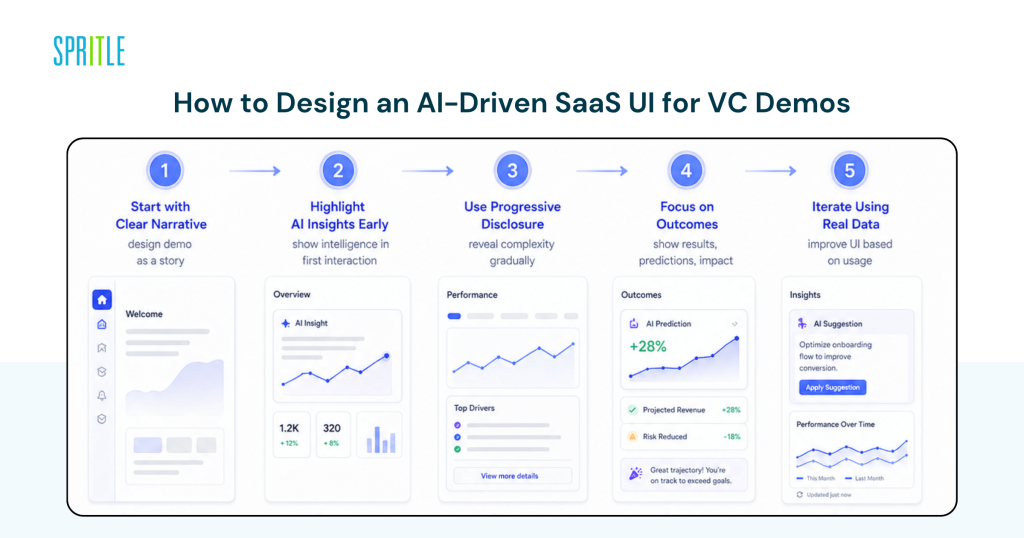
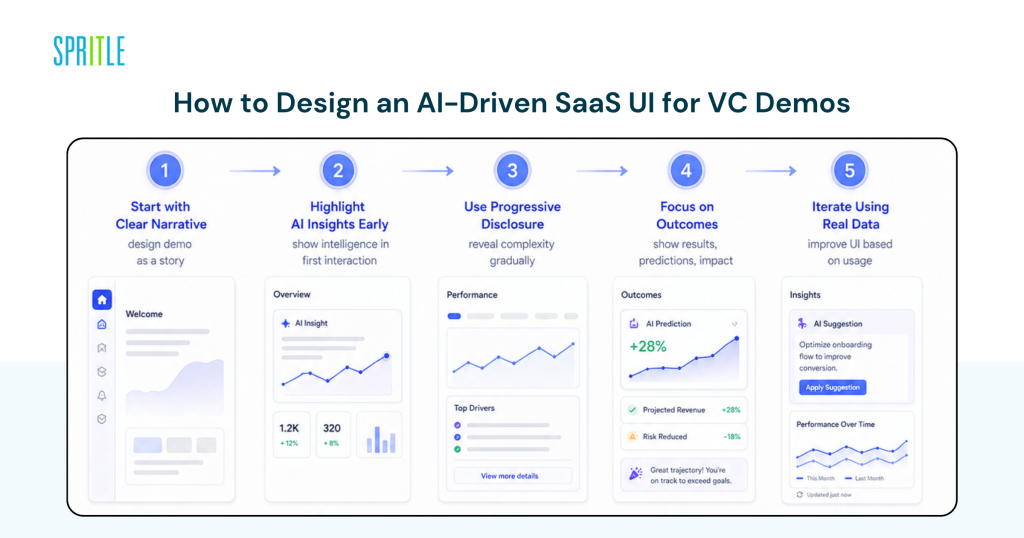
How to Design an AI-Driven SaaS UI for VC Demos
You don’t need to rebuild your product focus on what matters in the demo.
Practical Design Approach
- Start with a clear narrative
Design the UI flow around a story, not features - Highlight AI-driven insights early
Show intelligence within the first 2–3 minutes - Use progressive disclosure
Reveal complexity gradually - Focus on outcomes, not inputs
Show results, predictions, and impact - Iterate using real user data
Let ADLC guide UI improvements
What VCs Look for in AI-Powered SaaS Products
What separates funded startups from overlooked ones is clarity of value.
VCs expect:
- Visible AI capabilities
- Scalable architecture
- Data-driven decision-making
If your UI communicates these effectively, your product stands out immediately.
What to Look for in an ADLC Partner for UI Innovation
If you’re scaling AI UI design, look for:
- Experience in AI-driven software development lifecycle
- Strong UX + data integration capabilities
- Expertise in AI lifecycle management tools
- Ability to align UI with business outcomes
The right partner helps you translate AI capabilities into visible product value.
FAQ
Q: What do VCs expect to see in an AI-powered SaaS demo?
A: VCs look for clear problem-solving, visible AI capabilities, scalability, and differentiation. They want to see how the product uses data to drive decisions and improve over time.
Q: How does AI UI design improve demo outcomes?
A: AI UI design highlights insights, personalizes experiences, and demonstrates product intelligence, making it easier for investors to understand value quickly.
Q: Do all SaaS products need AI in their UI?
A: Not necessarily. AI should be used where it adds real value, such as recommendations, predictions, or automation—not just for the sake of it.
Q: How can startups implement AI UI design effectively?
A: Start with key use cases, integrate AI into core workflows, and iterate using user data. Partnering with ADLC consulting services can accelerate this process.
Conclusion
Investors don’t fund features they fund clarity, scalability, and potential. Your UI is the fastest way to communicate all three.
ADLC enables SaaS teams to move beyond static interfaces and build products that demonstrate intelligence in real time. The AI-driven software development lifecycle ensures that UI design isn’t just about usability it’s about continuously proving value.
If your product demo doesn’t show how your system learns, adapts, and improves, you’re leaving a critical signal on the table. The teams that win investor attention are the ones using the AI software development lifecycle to turn UI into a strategic advantage.